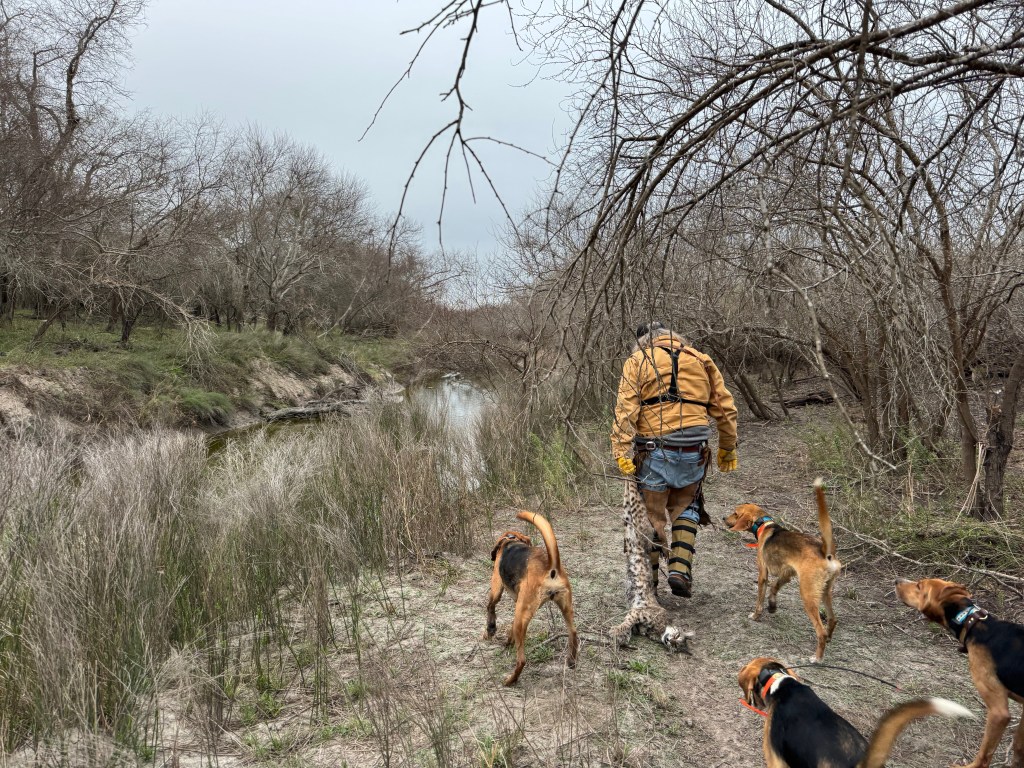
Apparently there are more hounds that don’t handle then do because I sure hear a lot about it. The hunters I take for Mellon Creek Outfitters comment on it without fail. Usually they follow the comment with a story about a hunt they did and how the hounds didn’t listen. The handle on my hounds is something that gets commented on a lot on social media and on the YouTube channel as well. With that in mind I thought maybe I should write something about why they handle as they do and how I teach them to do it.
Why they handle is easy, they handle because I can’t stand an ill-mannered dog of any kind. I have no desire to go hunting with my hounds, they go hunting with me. Meaning, I say when to hunt, where to hunt, and when we are finished hunting. The age-old lecture about taking the hunt out of dog by creating manners is simply a myth and there is absolutely no truth to it. Albeit, there is a fine line on when you make your corrections. Stay inside that line and you won’t take anything away from the dog.
“Come here” is a very simple phrase and one that my puppies learn well before they ever go hunting. I go in the puppy pen and make a big game out of it. After they’ve heard me say it a time or two and we’ve had some fun running around the pen I move on to step 2. Step 2 is when I carry a little bucket or folding chair in their pen and sit down with them. At first they come over and want to be petted but before long they get bored with that and go do other things. I wait for them to move away from me and start saying come here while clapping my hands. They all come running and I pet them up real good and make a big deal out of it. In no time at all they have the come here down and that’s all I do before they start hunting.
Hunting day 1: My pens are built in such a way that I can drive in a lane with the kennels on either side of me. Once I am inside, two main gates close behind me. With this set up the hounds can be let out of their individual pens where they can run around my truck but still be confined. This really helps with the handle process, especially the puppies. When I’ve turned out all of the hounds that I want to take hunting, I stand right at my tailgate. Standing there, I grab a collar, read the number on it, and call the dog by name that goes with that collar. For example, I grab collar 5, that’s the collar Rain wears. I stand still and call out, “Rain”, and I expect her to walk up to me and stand there to be collared. The puppy has no idea what this means and most likely isn’t certain what his/her name is at this point. I will try the “come here” but it rarely works with the new excitement going on. What I will not do at this point is walk to the puppy and catch it. I never want a dog to think that I will chase it for any reason. If I have stand by that tailgate for an hour I will, just waiting on the puppy to get close enough for me to grab it. Once that happens I say its name while collaring it. It has never taken over four times before the puppy either stands waiting or actually responds to his/her name when called. In either case the point has been made. From there I help the little fella in the truck and away we go.
My young hounds have never seen a trapped cat, never been allowed to run a coon, and never even been in a truck before day 1. When I turn the old hounds out I make sure the puppy gets out with them. Usually the puppy will follow the old hounds down the road, which is exactly what I want. At some point during the first hour the pup will either follow an old hound out in the brush and get lost or simply wonder off. When I notice the puppy is wondering around and not coming back I begin working on fixing it. This is where that line gets really thin. I want this puppy to have all of the confidence in the world and never be afraid to be out there hunting. I also want this puppy to be mindful of where he/she is and to not just mindlessly run without thinking. If I think the mindless running is happening I begin the process of correcting it. My first attempt is to blow my horn and call the dog’s name. I’d say this works about 50% of the time. When this doesn’t work I will push the tone button on the collar and call the dog again. Should this method not work I do something that rarely ever fails; I drive away. I realize that a lot of hunters may not have the room that I have to do this, but if you do, don’t be afraid to try it, it works wonders. Nothing makes a puppy rethink his process like being alone for the first time. I will go finish my hunt and return to find him. However, when I return I will not drive all of the way to where the GPS shows the puppy to be. In a perfect case scenario, I will stop short two or three hundred yards and for sure out of sight. Just like when I was collaring, I don’t ever want that dog to think that I will go to him. When I get to a few hundred yards away and out of sight, I will turn out three or four old dogs and honk my horn. If I don’t get a reaction I will call the puppy’s name vocally and whistle. 99 out of 100 times this does the trick and the pup comes my way. When this puppy sees the other dogs his body language completely changes. They become excited to the point of whimpering. A good sign and a testament that being alone works. If for some odd reason I go on four hunts and have to drive away and leave the puppy each time, my method changes slightly. When the mindless head up A&& syndrome hits I will blow the horn, call his name, and hit the tone button. If I get nothing, I will start at level 1 and work my way up until I hear an audible whimper that he felt it. When the whimper is heard I immediately yell a stern “come here” while honking my truck horn. Zoomed in on the GPS tight enough that I can see every movement, I will wait. If he points in any direction but toward me, I push the button. If he wants to run a mile the wrong way he’ll do it being shocked every five seconds, it’s his choice. The second he faces me, all pressure is stopped and my stern voice turns softer. When he finally does come out he’ll likely be scared and showing submissive body language. It is important that my body language shows happiness and enthusiasm. As badly as we’d like for it to be the case, your puppy isn’t going to understand when you say, ” Man I hated to do that but as long as you’re facing away from me, I had to hold the button down. Next time, just come when I call you and I won’t be forced to do that again.” Since we all know the dog can’t have a clue what all of that means we need to demonstrate that with our body language. Simply put, things get loud and hurt out there when e doesn’t listen, but when he does listen, everyone is happy and nothing hurts. You do run a slight risk in taking a little confidence out at this point but a dog that doesn’t have manners is just as bad as one that doesn’t hunt. In most cases, even if you do set the dog back a little, their confidence will return in a very short time. Consistency is key to creating handle in the shortest time possible. Every time you change your method, you basically start over. Dogs live by cause and effect, not listening has an effect that is negative, listening has a positive effect. Consistency in the hunter decides how long it will take the dog to understand. From here we move on to loading, changing directions hunting, no leashes EVER, and a host of other things I expect in a hound. But, the above is the foundation to all of the handle that you seen in my hounds.
 Melon Ranch Hounds
Leave a comment