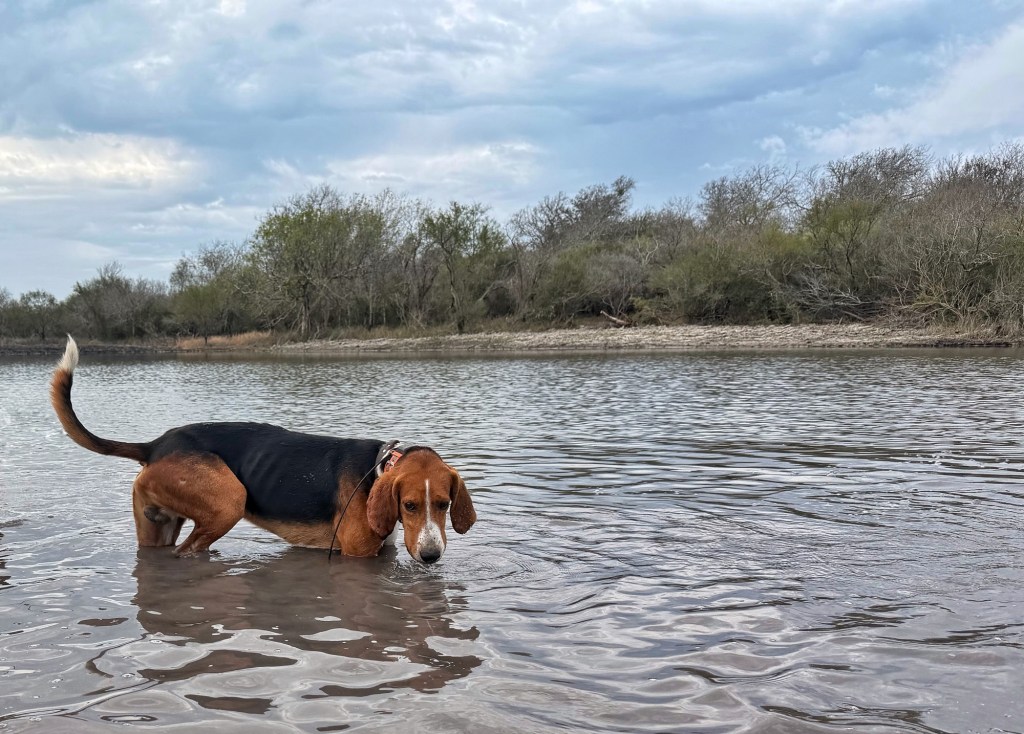
We live in south Texas and that means we deal with heat each and every year. From roughly mid-May through mid-October, it is hot more often than it isn’t. When July comes around, through the month of September we pray for any morning under 80 degrees. Aside from the rattlesnakes being a problem, the undergrowth removes most of the airflow. This time of year (especially on years with good spring rains) the weeds grow so thick it is hard to even walk through them. The main culprit for this is Giant Ragweed (we call it blood weed). This weed grows three to five feet tall, and the individual plants can be as close as an inch apart coming out of the ground. When you mix the already thick brush with a good stand of blood weed, cross that back on 78 degrees and no wind, you have a bad situation. To make matters worse, once this plant matures the seed heads dry up and go up dog’s noses, in our shirts and boot tops, and fill our pockets. Suffice it to say, if its already hot, muggy, and still outside it is nothing short of brutal under this stuff. I haven’t even mentioned the wild Johnston grass, dewberry vines, and Greenbriar vines; they are a serious issue as well.
Hunting in this part of the world during the above-mentioned months causes many problems that one hardly ever sees during the other half of the year. To begin with, the heat alone causes problems. Often in this part of Texas it is dry and there is no standing water around. This alone significantly raises the chances of hounds becoming dehydrated during a race. With dehydration comes muscle cramps, respiration problems, and at times heat strokes. These kinds of physical set back create a perfect storm for failure. When dogs are experiencing one or all the symptoms of heat and dehydrations, they cannot maintain the pressure it takes to consistently catch cats. Under normal conditions when the hounds lose the trail momentarily, they spread out looking. When it is this hot and void of airflow they tend to slow down and catch their breath when the scent isn’t driving their instinct to run. Every time this happens a cat has time to do what they do and that makes for longer races. Longer races in this kind of heat only exacerbates every negative symptom. Aside from the physical issues with dehydration, when dogs become too hot, they can lose their sense of smell. For a dog to smell properly their nose must be moist to trap scent molecules. Due to heavy breathing and extreme panting their nose dries out effectively reducing their ability to smell by up to 50%. Just the dehydration alone causes a reduction in the enzymes required for a dog to smell properly. When this happens along with the known fact that hot air makes scent molecules less dense, things can get nearly impossible. If the dogs are hot, you can bet the cat is hot as well. Many times, when the cat gets hot it will hunker down under something and just sit still. A bobcat doesn’t leave much scent in good conditions, and he leaves even less when he’s just hunkered down not moving. Considering that the hound at this point has likely lost some of his/her ability to smell they will circle for a bit and then stop to just catch their breath. If a good hound smells a trail, he/she will run to the death trying to catch the game they are after. When that scent goes away and they are near exhaustion they will slow down and try and catch their breath. This little lapse in time where pressure is concerned gives the cat time to sneak away. By the time the hounds catch their breath and something finds it, they have all that ground to catch up on. It becomes a vicious cycle and there will be several times during this hot time of year when the cat wins. Looking back at my logs from May – September I caught 97 cats out of 106 that I ran. Of the nine cats that escaped every one of them was because of the scenario mentioned above. It is this time of year when you find out what kind of heart your dogs have. I would estimate that hounds with less heart would catch less than 10% of the cats during the hot time of year.
I’ve learned that are a few changes that I can make during the hot time of year to minimize these problems. The first thing I consider when it’s hot is where I hunt. I will do my best to avoid any place that are super thick. I know the weeds are going to be bad, so I try to keep the brush to a minimum. The ideal place to avoid thick brush is anywhere where big thick trees grow. The problem with that in south Texas is that most places the tree get big is near a creek or river. We can’t hunt near creeks or rivers during the bad months due to alligators. An alligator would rather kill and eat a dog than anything. With that, I just do my best to hunt areas where there is the most airflow as possible. My second change in how I hunt is that I’ll always try and stay as close to the race as possible. I want to be close for a couple of reasons. The first reason is if the cat crosses and I am there, I can call the hounds to me and cut out some of the lead the cat may have. Another reason to be close is for when the race is coming right toward me, I can make a bunch of noise and likely turn the cat right back toward the hounds. Basically, I am trying to do all that I can to shorten the race as much as possible. It is also important to say that one cannot be afraid to call the hounds off should they become too hot. For me too hot is when I’m running a cat in the heat, and you have two or more dogs stop in the road halfway staggering and cannot catch their breath. When I see that I stop the entire race and get them water and tip my hat to the cat. Once a hound suffers a heat stroke, they become highly likely to have issues with heat from then on. Thus, it is important to avoid getting to that point as best one can.
Finally, we have plenty of water ready to go when hunting this time of year; especially during the July – September months. When I hunt in the summer I have two coolers on my truck on every hunt. Obviously one of them is filled with water for me. The second cooler is filled with water for the dogs with just enough ice in it to keep it cool (not cold). This cooler isn’t used for drinking water, this water is reserved for if I have a hound with a heat problem, I can slowly pour this water on them and bring down their temperature. If things get bad enough, I will drive to a water trough and submerge the dog down in the water until it cools off. One important point to mention is that you do not want ice cold water, you want cool water. Aside from the water used to pour on them, I have a designated water tank to give all the hounds water after a race. My tank is fifteen gallons, and I will place a couple water buckets on the ground and slowly run water on them. I don’t want the hounds to drink water so fast that they vomit, so I just trickle the water in. My goal is for two things to happen, I want the hounds to get their ample fill of water over an amount of time and while they are doing that slowly come back into a normal body temperature. This time of year, I make it a point to not load the hounds for a good while after returning to the truck. The last thing they need at this point is being in a dog box with little to no airflow. Shade, water, and time is my best friend at this point, I will take however much time I need to accomplish what needs to be accomplished, which is cool them down. Another thing I do is change my method of hunting. During the good time of year, I will turn my hounds out and hunt until I catch a cat or two or get too tired to continue. During the hot months, I will turn the hounds out, hunt a mile or two, stop and water them and just sit there for a while. In short, I will break the hunt up and give them time to regroup. I feel like these breaks keep the hounds in good working condition to be ready for a race when they start a cat. Lastly, I cut their feed down. At the most, I will hunt them four times a week during the hot months. I want to give them just enough feed so that I can see the last rib on them. Excess weight guarantees problems with the heat.
I assume there is always a give and take. I live in south Texas where the cat population is truly staggering. With that prime cat habitat comes bad heat certain times of the year. Being prepared with water and having the wherewithal to change how I hunt gives me the opportunity to find success. I’ve found that in doing things this way I can keep the old hounds in shape and sharp, the young hounds still learning, and when the good weather comes back around, everything is ready to go.
 Melon Ranch Hounds
Leave a comment